Rare Black Iceberg Spotted Off Labrador Coast Could Be 100,000 Years Old
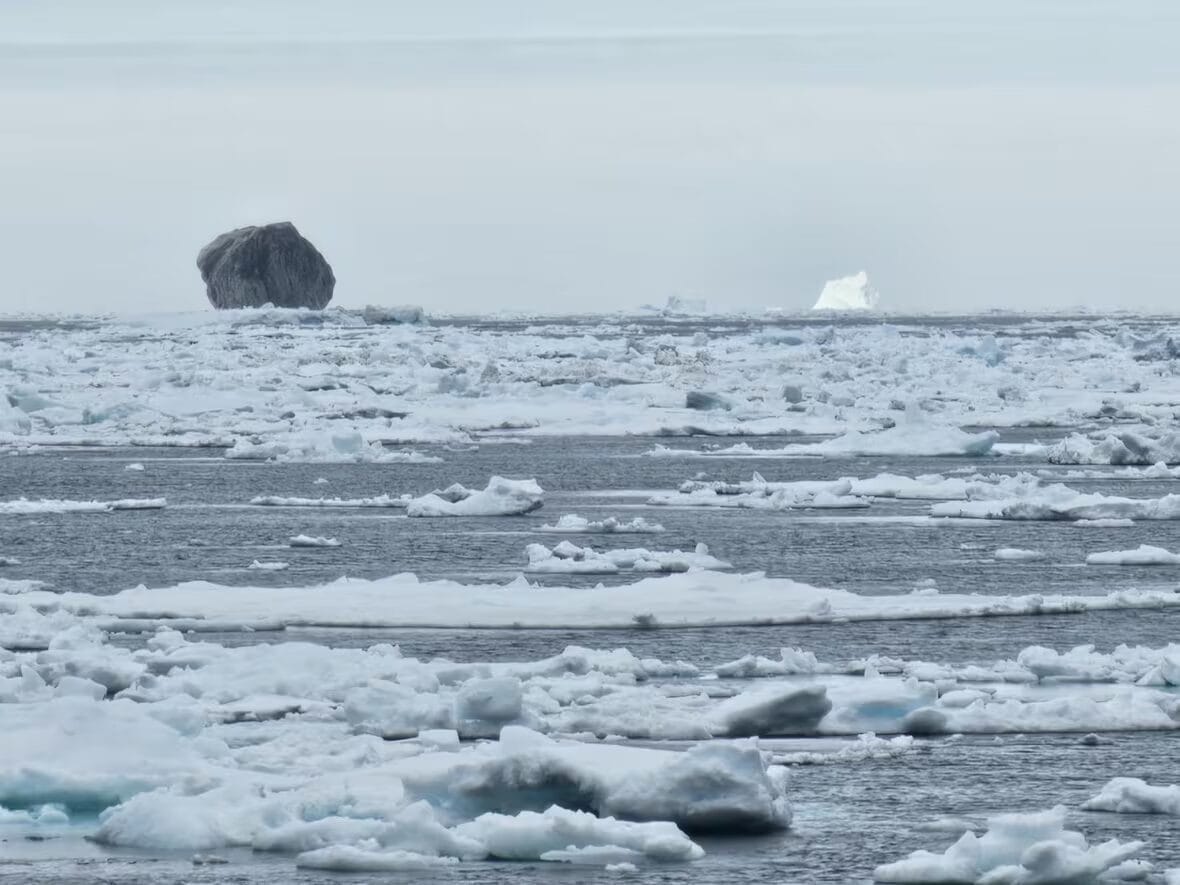
A rare black iceberg was recently spotted off the coast of Labrador, sparking widespread curiosity and even wild theories on social media. The iceberg, spotted by a fish harvester, is unlike any typical iceberg. It is almost entirely black, with a diamond shape and veins of dark grey and black, leading many to speculate about its mysterious origins.
What Makes This Black Iceberg So Unique?
The iceberg was photographed by Hallur Antoniussen, a seasoned fisherman from Carbonear, Newfoundland and Labrador, while he was working aboard the Saputi trawler. The photo quickly gained traction online, with some joking it could be an alien artifact or a giant mammoth frozen in time. However, scientists have a more grounded explanation.
Could This Iceberg Be Over 100,000 Years Old?
Lev Tarasov, a Memorial University professor, suggests the iceberg could be ancient—perhaps over 100,000 years old. He explained that the iceberg likely contains ice from Greenland’s ice sheets, which slowly flow toward the coastline. Along the way, these ice streams collect sediment, rocks, and dust, giving the iceberg its black color. Tarasov also pointed out that an asteroid impact in Greenland 12,000 years ago might have contributed additional particles, further darkening the ice.
The Journey of the Black Iceberg

This iceberg’s journey began long before it reached the Labrador coast. Icebergs like this one break off from the glaciers of Greenland, where ice flows through valleys, picking up dirt and debris before eventually making their way to the sea. After traveling for years, it finally arrived near Newfoundland, likely after melting along the way. Despite the large size of icebergs, only the tip is visible above water, with the majority submerged.
Theories Behind the Iceberg’s Dark Color
While the most widely accepted theory is that the iceberg’s color comes from millennia of accumulated dirt, some have suggested more unusual explanations, such as volcanic ash or even material from a meteorite strike. Tarasov, however, believes the iceberg’s age and the layers of dirt likely mean it hasn’t seen the light of day for hundreds of thousands of years.
What Does This Discovery Mean?
The sighting of the black iceberg not only piques scientific curiosity but also reminds us of the dynamic nature of ice and its ability to carry ancient materials. As more icebergs break off and float toward the ocean, each one carries with it a story that spans thousands, if not hundreds of thousands, of years.
Could this be one of the oldest icebergs ever spotted? And what secrets does the black iceberg still hold beneath its dark surface?
More…