Mikael Kingsbury Wins Historic Gold in Dual Moguls at Milano Cortina 2026
The King has officially restored order to the freestyle skiing world.
Mikael Kingsbury, the most dominant force in the history of moguls skiing, secured Canada’s first gold medal of theMilano Cortina 2026 Winter Games on Sunday. Competing in the Olympic debut of men’s dual moguls, the 33-year-old from Deux-Montagnes, Quebec, defeated his longtime rival Ikuma Horishima to claim the top spot on the podium.
This victory marks Kingsbury’s fifth career Olympic medal—a staggering resume that now includes two golds and three silvers. It also cements his status as the most decorated moguls skier of all time.
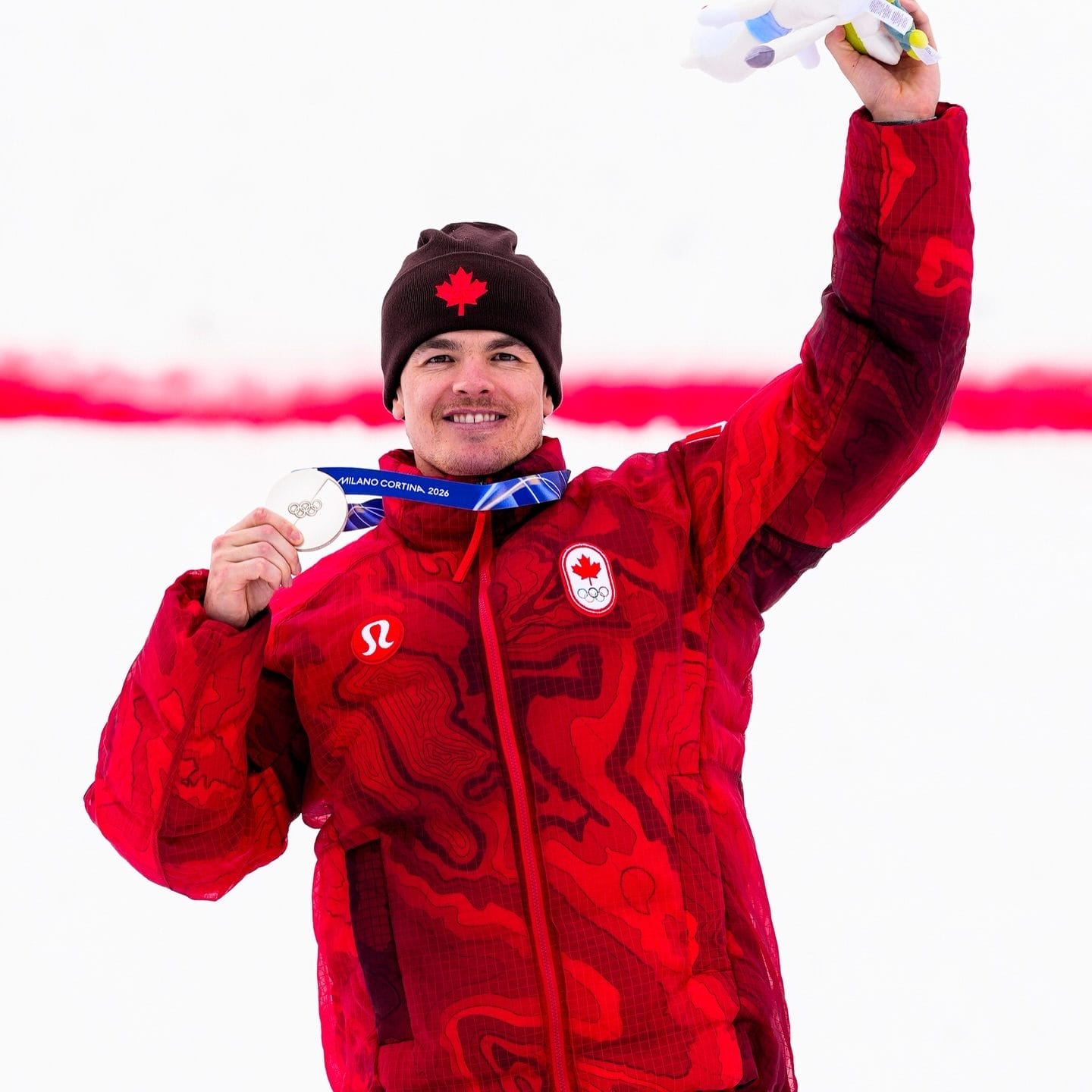
A Redemption Run for the Ages
Bouncing back from a tiebreaker heartbreak.
Just days ago, the narrative felt different. Kingsbury stood on the podium for the men’s single moguls event, but the medal around his neck was silver. In a heartbreaking finish, he lost a tiebreaker on turn scores to Australia’s Cooper Woods after both skiers finished with identical overall scores.
For an athlete with over 100 World Cup wins, silver often feels like a loss. But Sunday offered a shot at redemption in a format Kingsbury has owned for years: dual moguls.
The head-to-head format pits skiers against each other on parallel courses, demanding not just technical perfection but raw speed. Kingsbury, who has won gold in this event at the past four world championships, entered as the heavy favorite. He didn’t disappoint.
The Final Showdown: Kingsbury vs. Horishima
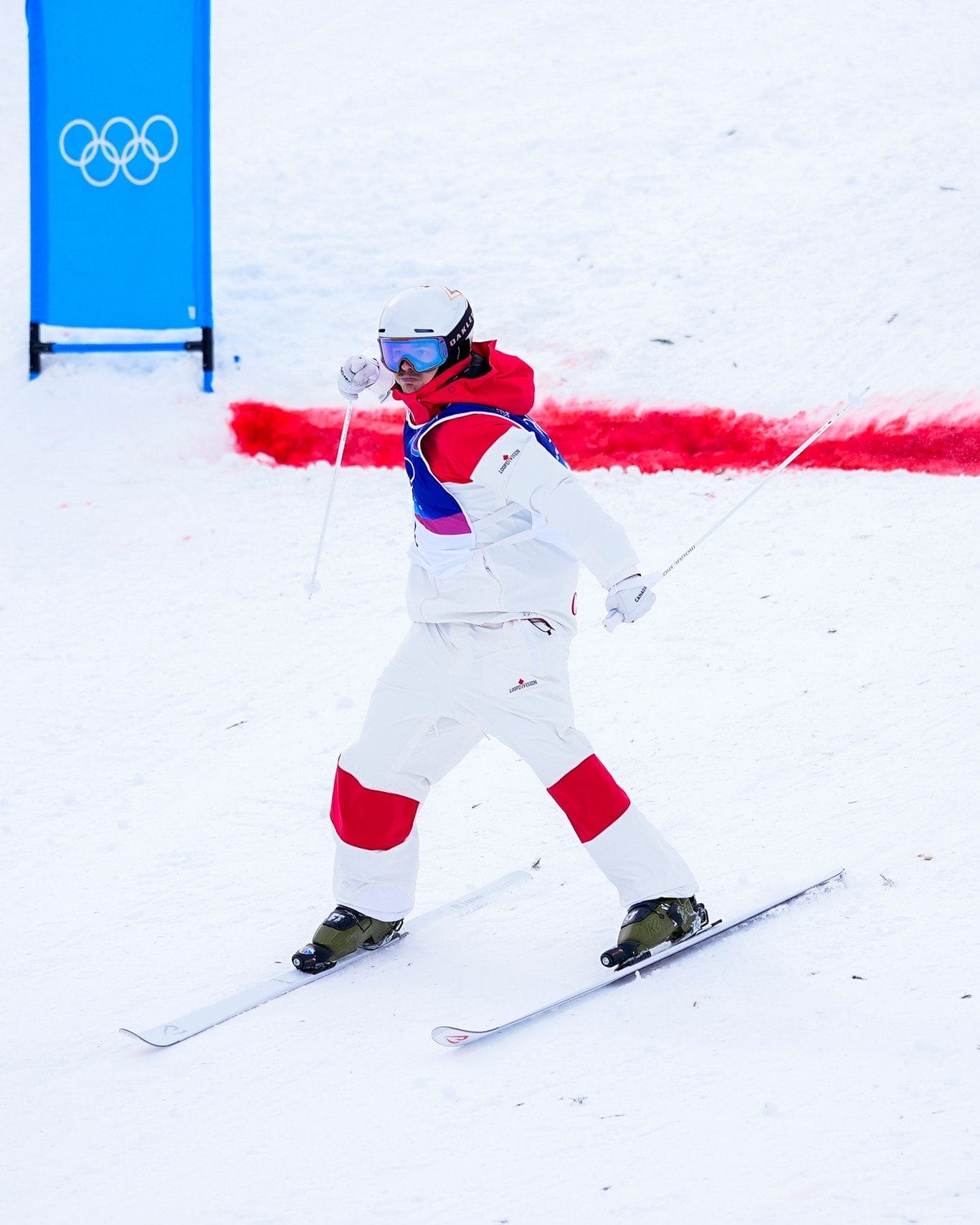
Precision beats power in the gold medal match.
The bracket set up a dream final: Canada’s Kingsbury versus Japan’s Ikuma Horishima. These two have traded Crystal Globes and world titles for years, making them the undisputed heavyweights of the sport.
In the gold medal run, the pressure appeared to get to Horishima. Pushing for maximum speed to unseat the Canadian, the Japanese skier faltered on the final jump, missing the landing and effectively handing the victory to Kingsbury.
Kingsbury crossed the finish line with a roar, pounding his chest in celebration before singing “O Canada” atop the podium—a fitting send-off for what is likely his final Olympic Games.
How The King Conquered the Bracket
A masterclass in technical consistency.
Kingsbury’s path to gold relied on his trademark consistency. While younger skiers often take massive risks, Kingsbury’s technical mastery allows him to absorb the bumps with unparalleled efficiency.
- Quarterfinals: Kingsbury advanced comfortably after South Korea’s Jung Daeyoon recorded a DNF (Did Not Finish).
- Semifinals: He faced Japan’s Takuya Shimakawa, who had previously upset the 2022 Olympic champion Walter Wallberg. Kingsbury remained unflappable, skiing a clean run while Shimakawa went off course.
This win brings Canada’s medal count in Milano Cortina to nine (one gold, three silver, five bronze).
Understanding the Significance
Why this gold matters for the history books.
This wasn’t just another medal; it was a history-making moment for the sport. The International Olympic Committee added dual moguls to the program for 2026, acknowledging the discipline’s high-octane excitement.
Winning the inaugural gold in this event adds a unique layer to Kingsbury’s legacy. He isn’t just a champion of the old guard; he dominated the new era as well.
Kingsbury’s Olympic Resume:
- Sochi 2014: Silver (Moguls)
- PyeongChang 2018: Gold (Moguls)
- Beijing 2022: Silver (Moguls)
- Milano Cortina 2026: Silver (Moguls), Gold (Dual Moguls)
For fans watching back home, Sunday’s performance was a reminder of why we call him the G.O.A.T. (Greatest of All Time). He faced the pressure of a “disappointing” silver, the weight of a nation seeking its first gold, and the intensity of a new Olympic format—and he delivered.
Related Reads: