DHL Express Locks Out Workers Across Canada Amid Parcel Sector Turmoil

· · ·

Thousands of DHL workers across Canada are on strike following a lockout by the company, further straining the country’s parcel delivery system. On Sunday, June 8, over 2,100 employees represented by Unifor—including drivers, warehouse staff, couriers, and call centre agents—walked off the job after DHL Express Canada issued a lockout notice.
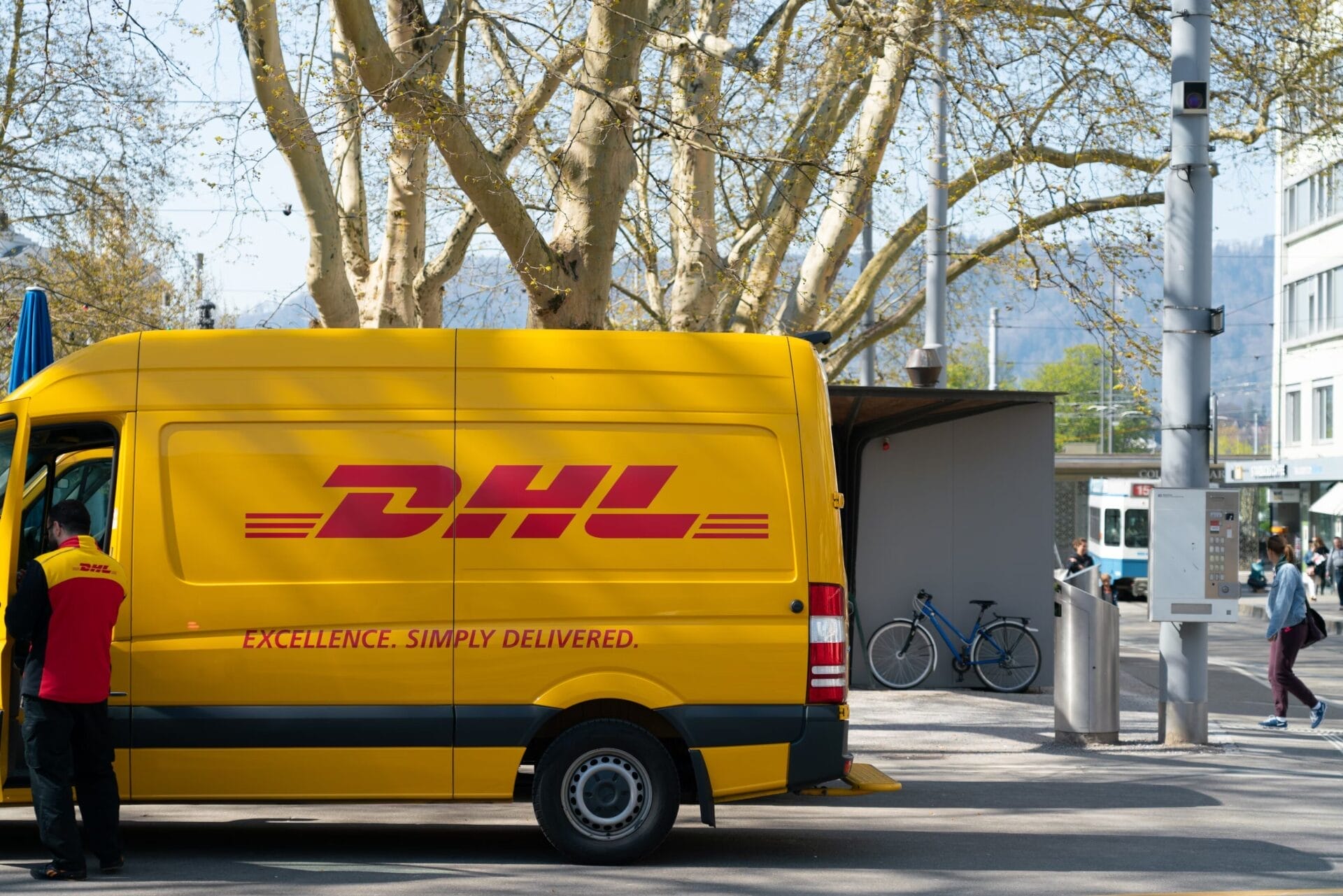
The job action adds to an already unstable delivery sector, as Canada Post also faces a standoff with its unionized workforce, currently under an overtime ban.

Company Says Deliveries Will Continue

Despite the strike and lockout, DHL says operations will continue across its Canadian network thanks to a contingency plan. According to spokesperson Pamela Duque Rai, the plan is in place to serve more than 50,000 customers, including major brands like Lululemon, Shein, and Temu.

“We do not anticipate significant disruptions to our service,” Rai said in a statement.

Union Condemns Use of Replacement Workers

Unifor accused DHL of using replacement workers, which is still legal under current Canadian law. However, new legislation banning the practice will come into effect on June 20. Union president Lana Payne called the timing deliberate and said DHL was “putting maximum pressure on our membership to concede.”

Advertisement

Payne added that the relationship between the company and its workers has worsened, warning of a “chill at the bargaining table.”

Disputes Over Pay, Conditions, and Surveillance

Unifor says the core issues include:

  • Wages and working conditions
  • Increased surveillance and automation
  • Proposed changes to the driver pay system

Under DHL’s proposal, some drivers could travel up to 100 km for pickups without pay, and “owner-operators”—independent contractors—could see reduced compensation.

In response, DHL said its proposal includes a 15% wage increase over five years, plus additional premiums for hazardous goods. The company also noted that its pay system revisions aim to address the evolving structure of Canada’s delivery market.

Advertisement

Impact on Formula One Grand Prix?

The union warned that the strike could affect DHL’s role in transporting equipment for the Formula One Canadian Grand Prix in Montreal. However, DHL clarified that its F1 operations are separate and would not be impacted.

Sector-Wide Labour Struggles Continue

This lockout and strike come during a turbulent period for Canada’s delivery industry. With Canada Post and its 55,000 workers still locked in negotiations, and now DHL’s conflict added to the mix, Canadians could face parcel delivery disruptions if talks continue to stall.

Do you think the use of replacement workers before the June 20 ban is fair or a loophole being exploited? Share your thoughts below.

More…

Advertisement

Read More..

  • · · ·

    This $749K Toronto House Comes with a Pool and a Price Drop

    Ever heard of Driver Inc.? Canada’s trucking industry is calling it a $1B scam
    Canadian Trucking Alliance calls ‘Driver Inc.’ biggest threat to industry

    Robyn Miller · CBC News · Posted: Jun 25, 2025 4:00 AM EDT | Last Updated: 17 minutes ago
    man in truck
    Karanveer Singh came to Canada as an international student in 2018, chasing a better life. He says that journey took a detour when he started in the trucking industry. (Robyn Miller/CBC)
    Social Sharing
    X
    Email
    Reddit
    LinkedIn
    The national voice of the trucking industry in Canada is renewing calls for the federal government to pump the brakes on what it says is a $1-billion scam.

    The scam, which the Canadian Trucking Alliance (CTA) has coined “Driver Inc.”, occurs when companies incorrectly classify drivers as independent contractors, instead of employees to save money on payroll taxes.

    “We believe that in some parts of Canada at least a third of the companies and the drivers are participating in this, and it’s hurting us twofold as a society,” said Stephen Laskowski, CTA president and CEO.

    “Those are taxes that aren’t going into our [economy], and on the flip side of it, it’s about a 30 per cent advantage in the marketplace.”

    Laskowski described Driver Inc. as a tax evasion scheme and says some trucking companies are purposely misclassifying drivers to save money. He says drivers also lose labour protections including fair pay, overtime and vacation pay, as well as health and safety protections.

    In 2021, the government made it illegal for federally regulated employers to misclassify employees, and added penalties for non-compliance.

    Exposing the trucking industry’s underground economy

    5 hours ago
    Duration9:49
    The national voice of the trucking industry in Canada calls it a $1-billion scam and the biggest threat they’re facing. CBC explores “Driver Inc.”
    In a statement to CBC, Employment and Social Development Canada (ESDC) said that prohibition was strengthened in 2024 by placing the burden on employers to prove a worker is not an employee.

    However, Laskowski said more needs to be done, identifying Driver Inc. as the biggest current threat to the industry — including the ongoing Canada-U.S. trade war.

    “We have worked and pleaded with governments to address it, and the reality is they are starting to, but nowhere near to the level that needs to be done. Nowhere near,” he said.

    Companies target newcomers
    Driver Karanveer Singh agrees there’s a lack of enforcement against companies that break the law.

    Singh came to Canada from India’s northern Punjab state as an international student when he was 18 years old.

    “I’m trying to chase the Canadian dream,” he said.

    But Singh’s journey took a detour shortly after he got his commercial trucking licence. He said the first two companies he worked for misclassified him as an incorporated driver, and also never paid him.

    Singh was able to prove to the Canadian Labour Board that he had been misclassified and the companies were ordered to pay what he was owed.

    While he was able to collect from one of the companies, Singh said it’s unlikely he’ll ever see the nearly $40,000 owed by the second company.

    “Until the government enforces it, it is useless,” he said, referring to the court order. “These companies, they know what they are doing…. Most of the time they will find new immigrants, new truck drivers to target because they are so easy to target because every new immigrant is desperate for a job.”

    A difficult problem
    Part of the CTA’s solution involves lifting a moratorium on assessing penalties for failing to complete the fees for service box of the T4A tax slip.

    Laskowski said that would help the CRA identify and audit companies that rely heavily on incorporated drivers.

    However, it could also further slow an already sluggish system, according to Ottawa tax lawyer Dean Blachford.

    man in suit on parliament hill
    Stephen Laskowski says he’s been lobbying the federal government for 10 years to do something to even the playing field in the trucking industry. (Robyn Miller/CBC)
    “With penalties comes disputes and penalty relief requests that clog up the system even if they are for small amounts,” he explained in an email to CBC.

    “Meanwhile, the companies that are pushing the limits the most with Driver’s Inc. still might not comply with the T4A requirement and instead take further evasive means (such as using shell companies) to creditor proof themselves from having to pay the penalty if CRA ever identifies them.”

    In a statement to CBC, the CRA said it’s working toward lifting the moratorium before enforcement commences.

    It also said the agency is not aware of the analysis underlying Laskowski’s claim that Driver Inc. has resulted in about $1 billion in lost tax revenue, and “therefore cannot comment.”

    Driving down business
    The owner of Kriska Transportation Group in Prescott, Ont., is also urging the federal government to act, saying the Driver Inc. model is driving companies that do comply with tax regulations out of business.

    The unfairness makes owner Mark Seymour’s blood pressure rise.

    “It’s widely known, it’s not a dirty little secret. It’s out of control,” he said.

    man in suit in front of bench
    Ottawa tax lawyer Dean Blachford says identifying and auditing companies that rely heavily on incorporated drivers risks slowing down an already sluggish system. (Robyn Miller/CBC)
    Seymour has been in the business more than four decades, taking over Kriska from his late father in 1994.

    “I have competed as many of us have for many years based on price and service where price should be established from the same ground rules as everyone,” he said.

    “That’s paying appropriate taxes, treating people as employees and in the manner that the government would expect.”

    man in plaid shirt in front of white truck
    Mark Seymour, CEO of Kriska Transportation Group, says compliant companies such as his simply can’t compete with those using the Driver Inc. model. (Robyn Miller/CBC)
    Ron and Francie Langevin own P.A. Langevin Transport in Carleton Place, Ont., and say they, too, worry about the future.

    “There’s so much wrong with this industry right now,” Ron Langevin said, adding he suspects the companies that operate under the Driver Inc. model are so focused on profits that they also let safety standards slip.

    “These issues are falling through the cracks, and the next time you’re driving on a highway with a transport truck beside you I want you to look at it and I want you to wonder how safe am I, really,” Francie Langevin said.

    Safety blitz kicks off as Ontario sees transport truck crashes soar
    Hidden camera, internal memo reveal how unqualified truck drivers are getting onto Canada’s roads
    Singh said in his experience, that assessment is true. He recalled being trained by a very inexperienced driver who got them into trouble at the Port Huron border crossing.

    “He hit the concrete wall over there at the border, and I was so surprised. Like, this is supposed to be my trainer and he just like damaged the truck,” Singh said.

    On his next trip, Singh said he was asked to be the trainer.

    “They did not [tell] me a single thing and just gave me a new training driver for me to train,” he said. “They want their stuff delivered, they want their job done.

    “I think when these companies are allowed to operate, Canadians are not safe,” he said.

    man and woman in navy blue in front of transport truck
    Ron and Francie Langevin worry about the future of the trucking industry. They suspect companies that use the Driver Inc. model also cut corners when it comes to safety. (Robyn Miller/CBC)
    ESDC said it is taking action, recently entering into an information-sharing agreement with the CRA to help with enforcement and compliance.

    It also pointed to a dedicated team of inspectors focused exclusively on the road transportation industry across Canada. Since 2023, ESDC said the team has conducted about 540 inspections and held 320 education sessions across the country.

Leave a Reply

Your email address will not be published. Required fields are marked *