N.B. Couple Chooses MAID Together After 41 Years of Marriage
On February 25, 2025, Gerald and Coby Goguen, married for 41 years, made a shared decision to end their suffering through medical assistance in dying (MAID). Surrounded by love and music, they said goodbye in adjacent hospital beds while holding hands.
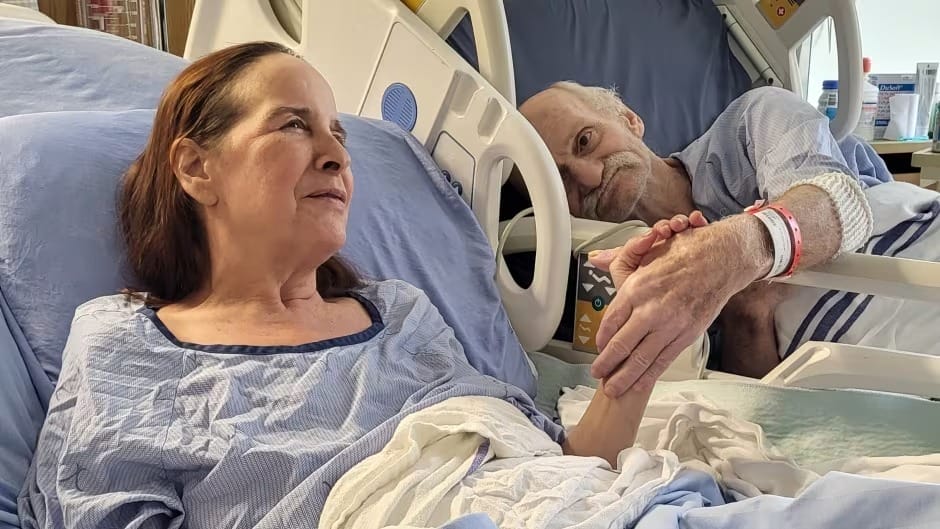
Their daughter, Lee Goguen, witnessed the moment and later shared their story, hoping to reduce stigma and help others understand why some choose MAID.
What Led to Their Decision?
Gerald, 70, had battled prostate cancer since 2008. Coby, 62, also had advanced cancer that had spread to her bones. By the end of 2024, both had experienced a sharp decline in health.
“They were in constant pain,” Lee said. “They wanted a peaceful end—on their own terms.”
While MAID was once a difficult concept for Lee, her parents’ decision helped her gain clarity. “I never felt this much closure,” she said.
How MAID Works in Canada
Since becoming legal in 2016, MAID has been a growing part of end-of-life care in Canada. It now accounts for about one in 20 deaths nationwide.
To qualify, patients must meet strict eligibility criteria:
- Be in an advanced state of decline
- Experience intolerable suffering
- Receive assessments by two independent medical practitioners
- Go through a minimum 90-day evaluation period, unless there’s imminent risk of losing consent capacity
In 2021, Canada introduced two tracks for eligibility:
- Track One: Death is reasonably foreseeable. Final consent can be waived.
- Track Two: Death is not foreseeable. Final consent must be given on the day of the procedure.
Beginning in March 2027, patients with mental illness as the sole condition may also be eligible under federal law.
Growing Demand for MAID in New Brunswick
According to health authorities, MAID requests in New Brunswick have increased steadily. The Vitalité Health Network recorded a jump from 105 requests in 2020 to 216 in 2024.
Dr. Julia Wildish, a palliative care physician with Horizon Health Network, says perceptions are shifting.
“At first, people were hesitant,” she said. “Now, more understand what MAID involves and why it’s important.”
Planning Their Final Moments
 Photo via Lee Goguen (CBC)
 Photo via Lee Goguen (CBC)


Lee was able to speak openly with her parents before their scheduled procedure. She played “I Love You” by the Climax Blues Band, a song from her parents’ wedding, as they prepared to say goodbye.
Coby leaned back to listen. Gerald looked at her with love. “He didn’t stop looking at her,” Lee said.
The hospital staff ensured they were side by side in matching beds, a gesture Lee says made their final hours feel humane and respectful.
The Role of MAID Coordinators
Chantale Arseneault, a regional MAID coordinator with Horizon Health, says helping patients through MAID is “the most rewarding job” she’s ever had.
“I ask people, ‘What does a good death look like for you?’” she said. “We support them in designing that day.”
Her role includes explaining the process, offering emotional support, and ensuring patients feel heard.
MAID and Family Closure
Lee believes knowing the exact time of her parents’ death helped her say everything she needed to say.
“I’ve never experienced a death with this much closure,” she said. “They were looking at each other and holding hands the whole time.”
Gerald and Coby Goguen’s story highlights how MAID can offer dignity, comfort, and control at the end of life. For their family, the decision was not about giving up—but about choosing peace over prolonged suffering.
As MAID becomes more widely understood, stories like theirs help Canadians engage in deeper conversations about life, death, and what it means to say goodbye with compassion.
More…