What Is Ground Pay? The Key Issue in the Air Canada Strike Explained
If you’ve seen news about the Air Canada strike, you have likely heard the term ‘ground pay’. Signs held by striking flight attendants mention unpaid labour, and it remains a central point of disagreement in contract talks. The dispute has grounded hundreds of flights and left travellers across the country facing cancellations.
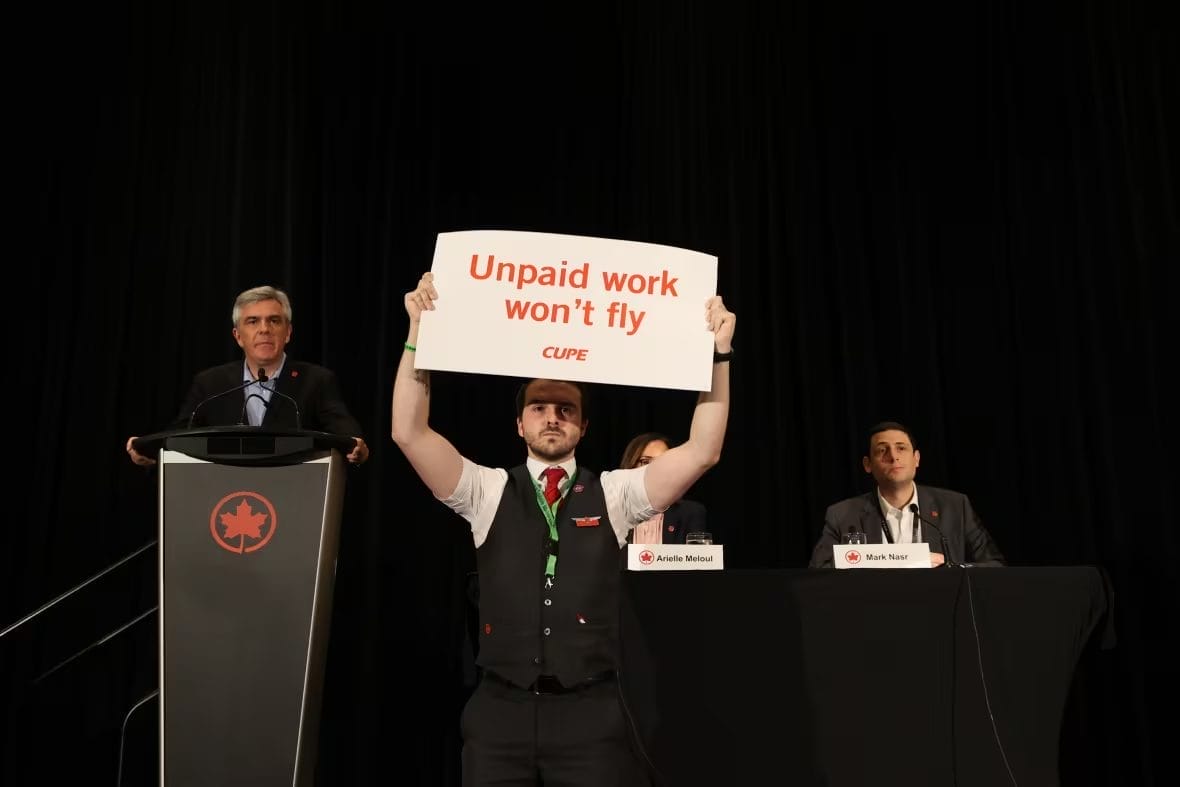
The Canadian Union of Public Employees (CUPE), which represents over 10,000 flight attendants, says its members just want to be paid for their time at work. But what exactly is ground pay, and why is it such a major issue? Here is a simple breakdown.
Defining Ground Pay
Ground pay is compensation for work flight attendants do while the plane is on the tarmac. Currently, the industry standard in North America is to pay cabin crew only when the aircraft is in motion. This means crucial tasks performed before takeoff and after landing are often unpaid.
These duties include:
- Conducting pre-flight safety briefings and checks.
- Assisting passengers with boarding and stowing luggage.
- Managing the deplaning process.
- Handling on-the-ground delays.
The union states this adds up to an average of 35 hours of unpaid work each month per attendant.
The Sticking Point in Negotiations
The conflict over ground pay is clear. Air Canada has offered to pay for ground time at 50 percent of a flight attendant’s normal hourly rate.
CUPE, the union representing the workers, has rejected this offer. They are asking for 100 percent pay for all time on duty, arguing that all work required by the employer should be fully compensated. This difference in positions is a major reason why a deal has not been reached.
The Origins of Unpaid Ground Time
This pay structure is not new. It dates back decades to a time when the airline industry faced severe financial pressure.
According to Ian Lee, a business professor at Carleton University, airlines operate on very thin profit margins. Following the deregulation of the airline industry in the U.S. and a recession in the 1980s, carriers began cutting costs to survive. One of those cost-saving measures was not paying cabin crews for time spent on the ground.
Why It’s a Major Issue Now
The issue has become more urgent because of increased flight delays. Since the COVID-19 pandemic, travellers have seen more time spent waiting at the gate or on the tarmac.
For flight attendants, more delays mean more hours of unpaid work. The problem is significant. In 2024, data from analytics company Cirium showed that nearly 30 percent of Air Canada flights did not land on time, placing it near the bottom of rankings for North American carriers.
Industry Shifts on Ground Pay
Air Canada is not alone in this practice, but the industry is starting to change. Several airlines in the United States have already made moves to address the issue.
Delta Air Lines, American Airlines, and Alaska Airlines have all introduced forms of boarding pay for their cabin crews. In Canada, Porter Airlines started paying for some boarding duties this year. The union for WestJet flight attendants has said its members face a similar situation and will be negotiating the issue when their contract expires.
Have recent travel delays affected your view on how airline staff should be compensated? Let us know your thoughts in the comments.
More…