Today’s Supermoon: Setting Up Ramadan, A Blood Moon, and a Solar Eclipse
A new supermoon on February 27, 2025, will trigger a series of astronomical events. This event will not be visible, but it will have significant effects, including the start of Ramadan, a total lunar eclipse, and a partial solar eclipse.
What Is a Supermoon?
A supermoon occurs when the moon is at its closest point to Earth, known as perigee. While most people associate supermoons with full moons, they also happen during new moons. This proximity enhances the moon’s gravitational pull, affecting ocean tides and setting the stage for celestial events.
How This Supermoon Impacts Ramadan
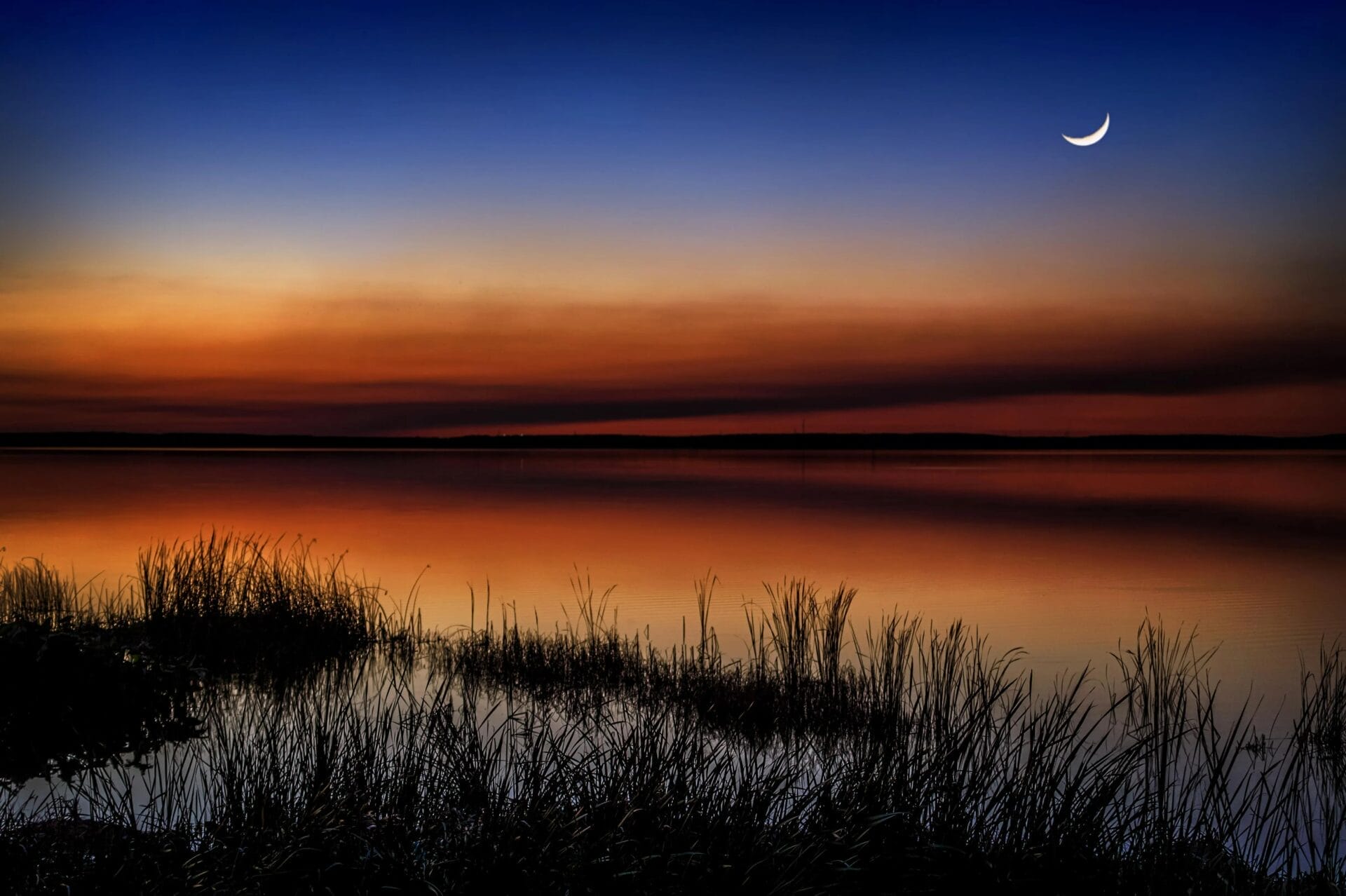
Ramadan, the ninth month of the Islamic lunar calendar, begins when the crescent moon appears after the new moon. Since the new moon occurs on February 27, 2025, the crescent moon—also called the Ramadan Moon—will likely be visible after sunset on February 28 or March 1. The start of Ramadan may vary by location due to different methods of moon sighting.
A ‘Blood Moon’ Total Lunar Eclipse on March 13-14, 2025
Halfway through Ramadan, a total lunar eclipse will turn the full moon a deep red. This phenomenon, often called a “blood moon,” will be visible across North and South America. The eclipse will begin at 1:09 a.m. EDT on March 14, with totality lasting from 2:26 to 3:32 a.m. EDT. It will be the first total lunar eclipse since 2022.
A Partial Solar Eclipse on March 29, 2025
Two weeks after the lunar eclipse, a partial solar eclipse will occur as the moon moves between the Earth and the sun. This event will be visible in North America, Europe, and parts of Canada. The best views in North America will be in Quebec and eastern Canada, where up to 93% of the sun will be covered at sunrise.
Ramadan’s End and the Shawwal Moon
The partial solar eclipse coincides with the end of Ramadan. After the eclipse, observers will look for the first crescent moon, known as the Shawwal Moon. Its appearance signals the start of Eid al-Fitr, marking the end of Ramadan.
Why the Start of Ramadan Varies
Ramadan’s start date varies by country and even within cities. Some communities rely on visual sightings of the crescent moon, while others use astronomical calculations. Local weather, time zones, and religious traditions all play a role in determining the exact start date.
More…