Canadians Take Trump’s Annexation Talk Seriously Amid Trade War Tensions
Canadians are increasingly concerned about President Donald Trump’s statements regarding Canada’s potential annexation as the 51st U.S. state. While once dismissed as political rhetoric, recent trade disputes and economic threats have fueled public and governmental anxiety.
Trump’s Claims and Economic Pressure on Canada
President Donald Trump has repeatedly suggested that the U.S. could absorb Canada, arguing that the border is an artificial division. His remarks coincided with ongoing economic tensions, including new U.S. tariffs on Canadian goods.
- Canadian Foreign Minister Mélanie Joly warned that Trump’s strategy might involve weakening Canada’s economy before an eventual annexation attempt.
- Trump assured that Canada could keep its national anthem, “O Canada”, but emphasized the economic ties between both nations.
Ontario’s Response and Trade War Escalation
Ontario Premier Doug Ford rejected Trump’s claims, stating that Canada is not for sale. Before tensions eased, Ford had proposed a surcharge on electricity exports to the U.S., prompting Trump to threaten doubling tariffs on steel and aluminum.
- Ford later agreed to a meeting with U.S. Commerce Secretary Howard Lutnick to de-escalate the dispute.
- Trump also demanded that Canada remove tariffs on U.S. dairy products, although fact-checkers found his claims misleading.
Canadians React with Public Outcry and Economic Backlash
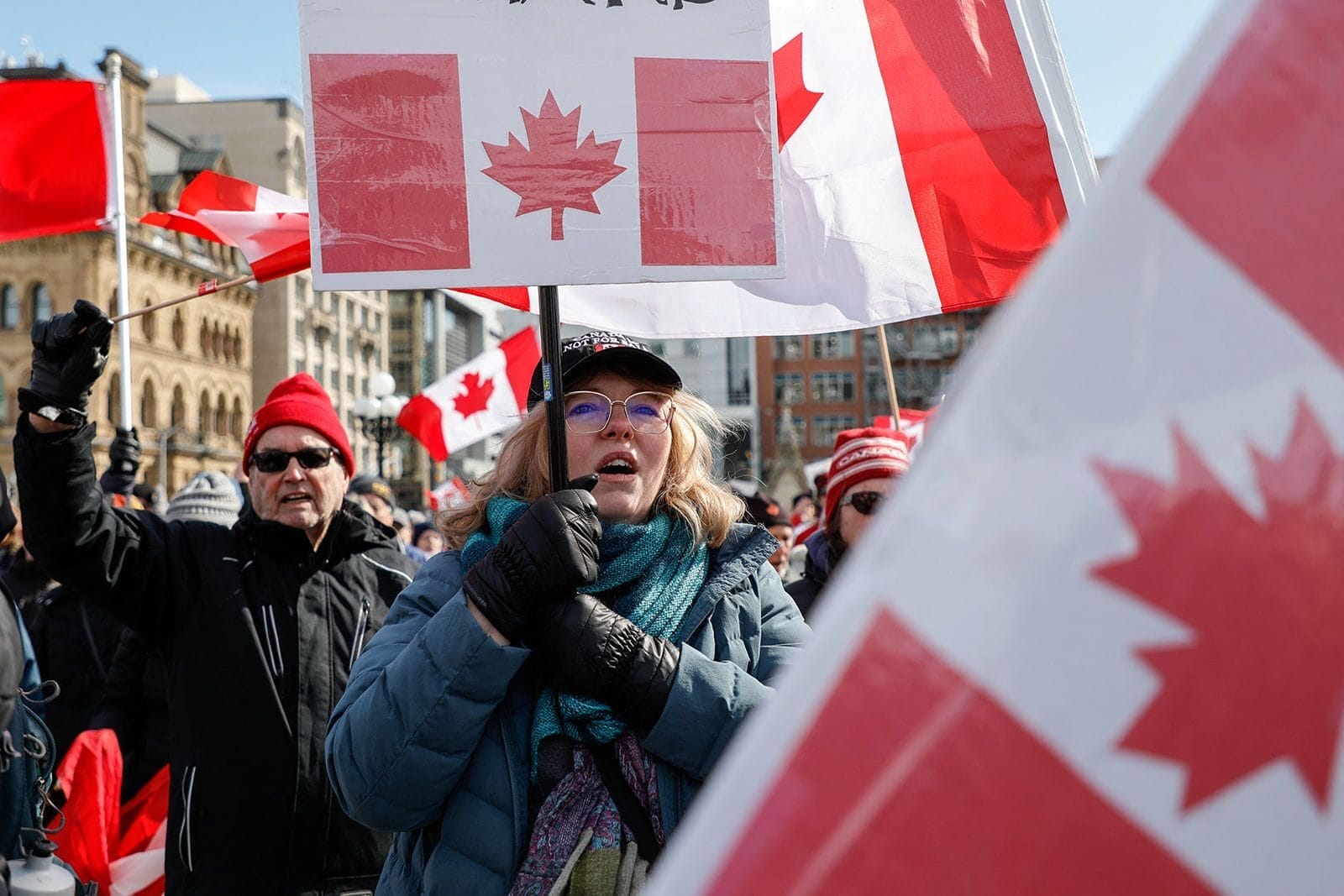
Many Canadians now see Trump’s statements as a serious political and economic threat. Public sentiment toward the U.S. has shifted, with:
- 63% of Canadians believing Trump’s annexation talk should be taken seriously.
- A drop in favorable views of the U.S., falling from over 50% in June to just one-third today.
- Boycotts of U.S. products and booing at NHL games as symbolic protests against U.S. policies.
Political Impact: Would Annexation Shift U.S. Politics?
If Canada became a U.S. state, it would dramatically reshape American politics. With a population larger than California, Canada’s admission as a single state could disrupt the political balance.
Historically, new U.S. states have undergone plebiscites to determine local support. However, most Canadians oppose annexation, and Trump’s stance on declaring English the U.S. national language conflicts with Canada’s bilingual identity.
What’s Next for Canada-U.S. Relations?
While an actual annexation remains highly unlikely, the economic and political tension between Canada and the U.S. continues to grow. Canada may strengthen trade ties with Europe and within its provinces to counteract U.S. pressure.
For now, Canadian leaders are focused on defending national sovereignty and pushing back against economic threats from Washington.
More…
- https://edition.cnn.com/2025/03/11/politics/canada-trump-51st-state-rob-ford/index.html?iid=cnn_buildContentRecirc_end_recirc
- https://www.overheretoronto.com/google-searches-for-recession-and-tariff-surge
- https://www.reuters.com/world/americas/trump-says-he-will-raise-tariffs-canada-metals-50-2025-03-11