Private Lunar Lander Blue Ghost Lands Successfully on the Moon
A private lunar lander has successfully touched down on the Moon, marking a significant achievement in commercial spaceflight. Firefly Aerospace’s Blue Ghost became the second private spacecraft to reach the lunar surface, following a smooth landing on March 2, 2025.
A Historic Touchdown
Blue Ghost lifted off from Earth on January 15, 2025, aboard a SpaceX rocket. After a two-week orbit around the Moon, the lander autonomously descended onto the lunar surface, specifically targeting the Sea of Crises, a vast impact basin visible from Earth.
Unlike previous commercial missions that faced challenges, Blue Ghost landed upright and intact. The team at Firefly Aerospace’s Mission Control in Texas confirmed the successful landing, sparking celebrations among engineers and scientists.
NASA Collaboration and Scientific Goals
NASA funded the mission as part of its Commercial Lunar Payload Services (CLPS) program, which encourages private companies to develop lunar exploration capabilities. The space agency invested $101 million in payload delivery and $44 million for scientific instruments.
Blue Ghost carried ten NASA experiments, including:
- A drill to measure subsurface temperatures up to 10 feet (3 meters) deep
- A vacuum system to collect lunar soil samples for analysis
- A dust-mitigation device designed to reduce the impact of abrasive lunar particles
- A navigation experiment testing signals from GPS and Galileo satellites
These tools will operate for about two weeks, the duration of lunar daylight, before shutting down when temperatures plummet at night.
The Growing Private Space Race
Blue Ghost’s successful landing solidifies Firefly Aerospace’s position in the growing field of private lunar exploration. The company now stands alongside Intuitive Machines, which became the first private firm to land on the Moon in February 2024. However, that mission ended with the spacecraft tipping over on a crater slope.
More private landers are set to arrive soon:
- March 7, 2025: Intuitive Machines’ Athena lander aims for a site near the Moon’s south pole.
- June 2025: Japanese company ispace plans a second landing attempt after its 2023 crash.
The increasing number of private missions is paving the way for a sustainable lunar economy. NASA aims to send at least two private landers per year to test technologies before astronauts return to the Moon.
Why the Moon Matters
According to planetary scientist Dr. Simeon Barber, the Moon serves as a launchpad for deeper space exploration. Its environment allows scientists to test robotic systems in extreme conditions before using them for Mars and beyond.
The Apollo missions of the 1960s and 1970s proved that humans could visit the Moon, but their cost was unsustainable. Private companies now seek cost-effective ways to support long-term exploration. Extracting resources like water ice could reduce the need to transport supplies from Earth, making future missions more feasible.
What’s Next for Blue Ghost?
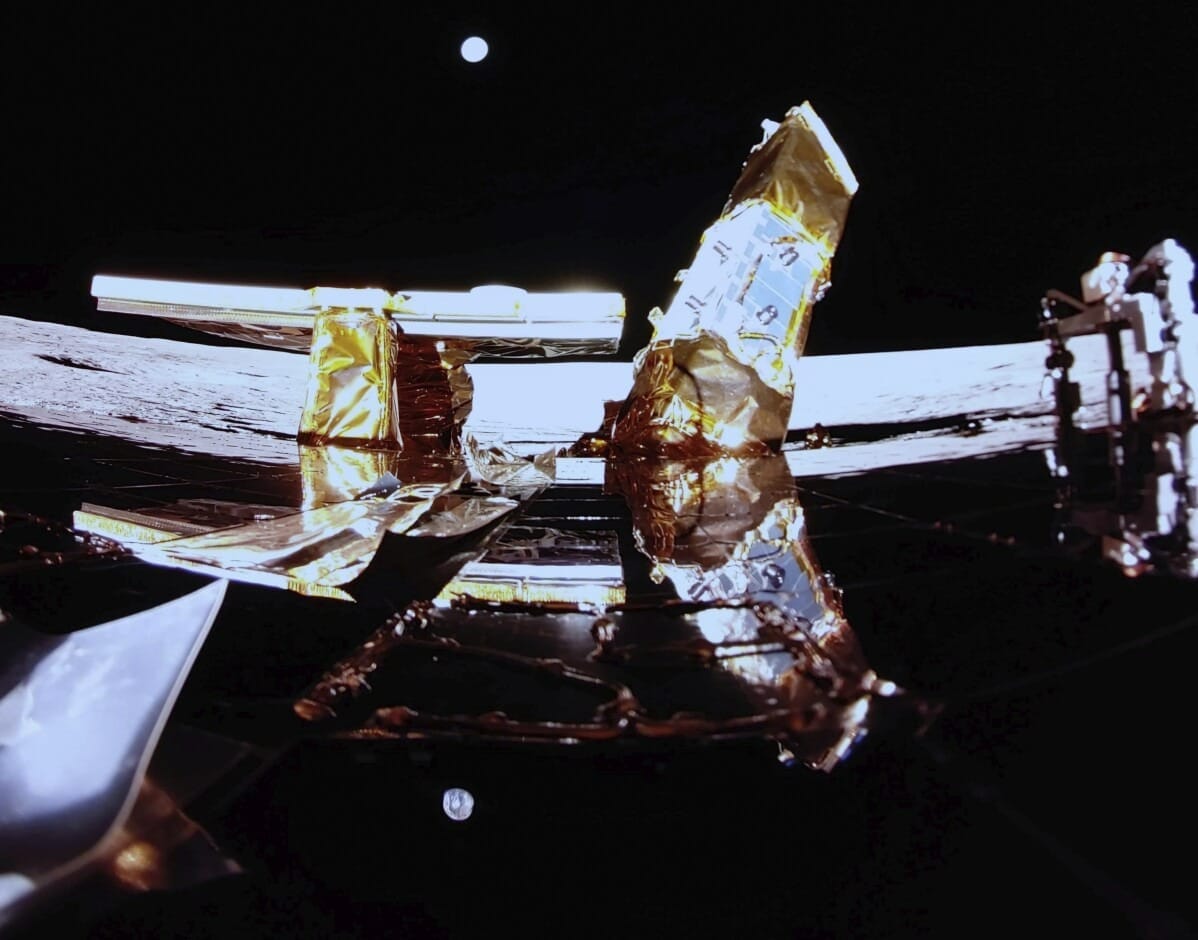
Blue Ghost has already begun transmitting images from the lunar surface. The first photos included a selfie of the lander, partially obscured by sunlight, and an image of Earth appearing as a small blue dot in the distance.
Over the next two weeks, its instruments will collect data on lunar dust, soil, and temperature. These findings will contribute to NASA’s Artemis program, which aims to return astronauts to the Moon later this decade.
More…