Why Gas Prices in Canada Are Spiking (And When They Might Drop)
If you’ve pulled up to the pump this week, you’ve likely felt a familiar sting. Gas prices in Canada have surged almost overnight, catching many drivers off guard. As of this weekend, the national average has climbed to 150 cents per litre—a steep jump from the 133.4 cents we saw just a week ago.
The pain is being felt from coast to coast. BC gas prices are currently leading the country at a staggering 168.6 cents per litre, while Toronto gas prices and general Ontario fuel costs have also seen sharp overnight increases, with cities like Barrie seeing jumps of up to six cents in a single day.
If you are wondering, “Why are gas prices so high right now?” you aren’t alone. Here is a breakdown of what is driving the surge, how it impacts the broader economy, and what you can do to protect your wallet.
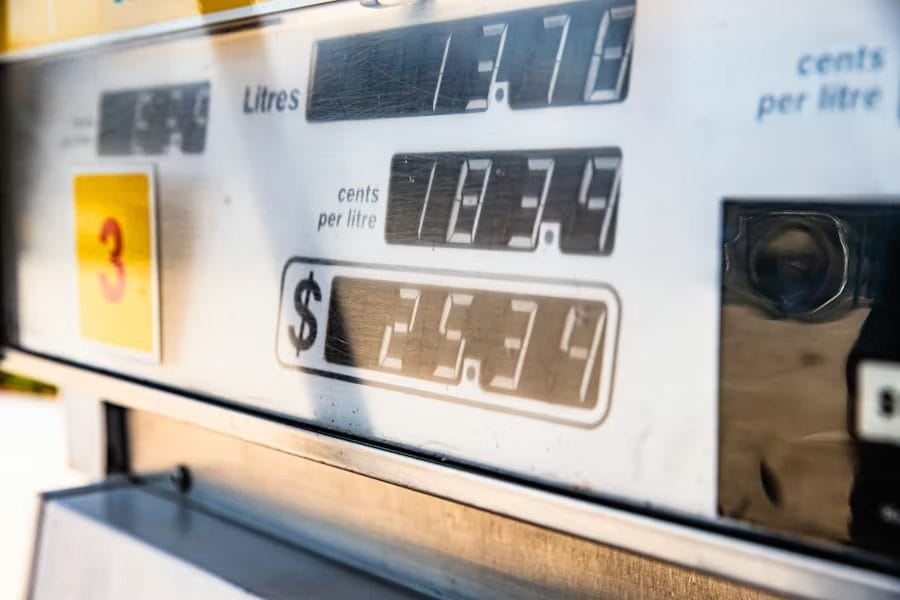
Why are Gas Prices Going up in Canada? The Global Catalyst
The sudden spike at the pump has very little to do with domestic issues and everything to do with international conflict. Following recent military escalations involving the U.S., Israel, and Iran, global energy markets have been thrown into a state of deep uncertainty.
How does the Middle East conflict affect Canadian gas prices?
A major factor is the disruption of oil tanker traffic in the Strait of Hormuz. This narrow waterway is a crucial global artery; approximately one-fifth of the world’s oil supply passes through it.
When conflict threatens this region, global markets panic about potential supply shortages. This panic recently drove U.S. benchmark crude oil prices above $90 US a barrel for the first time since late 2023.
It’s important to note that Canada and the United States produce plenty of their own oil. According to industry analysts at GasBuddy, North America is not facing an actual fuel supply shortage. However, oil is priced on a global market. When the global price per barrel skyrockets, those costs are passed directly to Canadian consumers at the pump.
The Ripple Effect: It’s Not Just Pain at the Pump
While paying more to fill your tank is frustrating, the broader economic impact of this conflict could be even more significant for Canadians.
Energy is the backbone of the economy. When fuel costs rise, so does the cost to transport goods. This means those elevated fuel prices will eventually show up in your grocery bills and retail purchases, fueling inflation.
If inflation begins to climb again, the Bank of Canada and the U.S. Federal Reserve may be forced to keep interest rates higher for longer. Elevated interest rates can slow economic growth and keep mortgage rates high, putting further strain on Canadian households and the housing market. Furthermore, a high-energy-cost environment makes Canadian manufacturing less competitive on the global stage.
Gas Price Forecast Canada: Will Gas Prices Go Down Soon?
Unfortunately, the short-term gas price forecast in Canada suggests drivers should brace for impact.
Even if the conflict reaches a swift resolution, historical data shows that global oil markets take time to cool off. Energy experts, including Warren Mabee, director of the Institute for Energy and Environmental Policy at Queen’s University, note that price disruptions tend to linger well after a conflict wraps up.
Consumers should expect these disrupted prices to stick around for at least a couple of months. While we aren’t looking at a 1970s-style energy crisis where prices quadruple, experts project that gas prices will likely settle around 5 to 10 per cent higher than they were before this conflict began.
How to Save Money on Gas in Canada: 5 Ways to Soften the Blow
You can’t control global oil markets, but you can control your driving habits. Here are a few practical ways to mitigate the damage to your budget:
- Leverage Technology: Use apps like GasBuddy or Waze to track real-time fuel prices in your neighborhood and find the cheapest station before you drive.
- Time Your Fill-Ups: Gas stations frequently hike prices on Thursdays and Fridays ahead of the weekend. Try filling up on Monday or Tuesday evenings when prices historically tend to dip.
- Stack Your Rewards: Now is the time to maximize loyalty programs. Link your PC Optimum, Petro-Points, or Journie Rewards to your credit cards to earn cash back or cents-off-per-litre discounts.
- Drive Efficiently: Aggressive acceleration and hard braking can lower your gas mileage by 15% to 30% at highway speeds. Drive smoothly and stick to the speed limit.
- Lighten the Load: Remove unnecessary weight from your trunk and take off aerodynamic drags like empty roof racks, which force your engine to work harder and burn more fuel.
Frequently Asked Questions (FAQ)
Prices are rising due to the recent military conflict between the U.S., Israel, and Iran, which has threatened global oil shipping routes (specifically the Strait of Hormuz) and caused the global price of crude oil to spike.
Even though Canada produces its own oil, fuel is priced on a global commodity market. When global uncertainty drives the price of a barrel of oil up, Canadian refineries pay more for crude, passing those costs onto consumers.
Experts predict that prices will remain elevated for at least a few months. Even if the conflict ends quickly, markets take time to stabilize, meaning higher prices are likely to stick around in the near term.
You can save money by using price-tracking apps like GasBuddy, filling up early in the week, driving more conservatively to improve fuel efficiency, and maximizing grocery and gas station loyalty rewards programs.
How are these sudden gas price hikes changing your daily commute or your upcoming summer plans? Drop your thoughts in the comments below and join the community discussion.
You Might Also Like: