
Wildfire Smoke Triggers Air Quality Warnings in 4 Provinces — and Reaches the U.K.
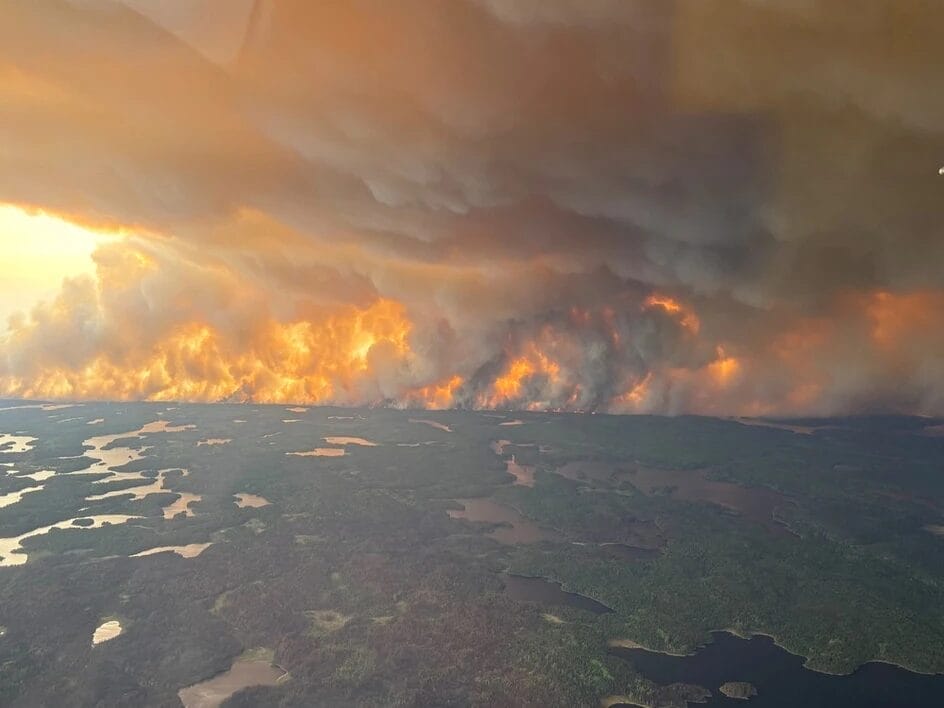
Canada is in the midst of a growing wildfire emergency, with air quality warnings and advisories issued in Alberta, Saskatchewan, Manitoba, and Ontario. As more than 100 wildfires burn across the Prairies, over 25,000 people have been forced to evacuate, and the smoke is spreading far beyond Canada — even crossing the Atlantic to the U.K.
Where Are Air Quality Warnings in Effect?
Environment Canada has issued warnings for several regions as thick smoke blankets large parts of the country. Here’s where conditions are most severe:
Alberta
- Northern regions, including Fort McMurray and Fort Chipewyan, are experiencing very poor air quality and low visibility.
- Officials warn that conditions can shift quickly, even within the same community.
Saskatchewan
- The northeast, including Lac La Ronge Provincial Park, faces hazardous air conditions.
- About 8,000 residents from 20 northern communities have been evacuated.
- Areas like Timber Bay and Molanosa are under direct threat from spreading fires.
Manitoba
- The Flin Flon area, where 5,000 people have evacuated, has seen air quality levels hit a “very high risk” 10+ on the Air Quality Health Index (AQHI).
- Even Winnipeg is under an air quality warning, although some improvement was expected with incoming rain.
Ontario
- Northern Ontario, including Kenora and Grassy Narrows, has air quality warnings in effect.
- Kenora has issued a fire ban, cancelling burning permits and prohibiting fireworks.
Smoke Crossing Borders
The wildfires are so intense that their smoke has:
- Drifted south into the U.S., affecting air quality as far as Georgia.
- Crossed the Atlantic Ocean, where it’s now reaching the U.K. While most of the smoke over Britain remains high in the atmosphere, experts say it could produce striking sunsets but won’t impact air quality at ground level.
What You Should Know About Wildfire Smoke Health Risks
Environment Canada has stressed that no one is immune to the health effects of wildfire smoke, especially:
- Seniors (65+)
- Pregnant women
- Children and infants
- People with chronic health issues or respiratory conditions
- Outdoor workers
Recommended precautions include:
- Avoid outdoor activities
- Stay indoors with windows and doors closed
- Use certified N95 respirators when exposure is unavoidable
- Run air purifiers or ventilation systems with clean filters
Common symptoms include sore throat, headaches, coughing, and eye irritation. If you experience wheezing, chest pain, or severe coughing, seek medical help.
As wildfires continue to spread, how is your community coping with air quality issues? Have you taken any steps to protect your health?
More…


